Eight Precepts Retreat: Thousand-armed Avalokiteśvara
千手千眼觀音禁飲食齋,在漢地簡稱「八關齋戒」,藏語「紐涅」。此佛事是清淨自我罪業、障礙,最根本直接而快速的法門之一;經由紐涅的持戒,能深切體會飢渴之苦,令大慈悲心油然而生。藏文字義中,「紐」是禁食行齋戒,「涅」是安住於此境,「紐涅」即安住於禁食齋戒的境界。釋迦牟尼佛云,「若有人在…
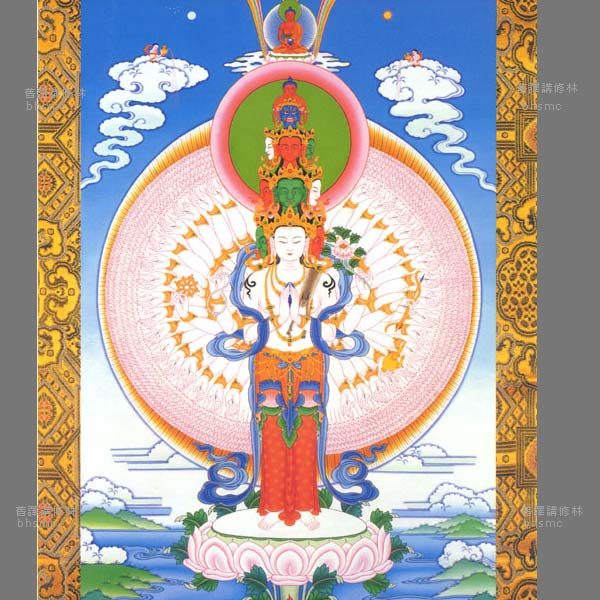
It is said the the personification of perfect Compassion, Avalokiteshvara (Guanyin) Bodhisattva (a great being who aspires to help all sentient beings be free of suffering before entering the bliss of Buddhahood), in the beginning of His/Her Bodhisattva career of helping sentient beings, vowed that "Should He ever become disheartened in saving sentient beings, may His body shatter into a thousand pieces." This might seem extreme, but it was symbolic of His overwhelming great Compassion and determination.
The Eight Precepts are eight guidelines of Buddhist morality, primarily observed by lay Buddhists on special occasions, and are typically also practiced during intensive meditation retreats of one day or longer. Some lay Buddhists take the Eight Precepts as a training lifestyle for the duration of their life in a sort of semi-monastic life.
- I undertake the precept to refrain from destroying living creatures.
- I undertake the precept to refrain from taking that which is not given.
- I undertake the precept to refrain from sexual activity.
- I undertake the precept to refrain from incorrect speech.
- I undertake the precept to refrain from intoxicating drinks and drugs which lead to carelessness.
- I undertake the precept to refrain from eating at the forbidden time (i.e., after noon).
- I undertake the precept to refrain from dancing, singing, music, going to see entertainments, wearing garlands, using perfumes, and beautifying the body with cosmetics.
- I undertake the precept to refrain from lying on a high or luxurious sleeping place.
- Notice:
- The retreat can divide into 1 day retreat ( nei-nei) and 3 days retreat ( new-nei)
- The Eight Precepts to be undertaken by all participants: 1day / 3 days
- Please prepare travel tableware, drinking cup, blanket, sleeping bag